Nose
Chronic infections of the nasal mucosa, often involving the sinuses, should be assessed by a specialist. The nose performs important functions: breathing, humidifying and warming the air we breathe, the sense of smell and the resonance of the voice. Diseases of the nose and sinuses can considerably impair these functions. The therapy must be tailored individually.
Sinusitis and nasal polyps
Inflammation of the sinuses (sinusitis) can be acute or chronic. Acute sinusitis usually develops as a complication of a cold and manifests as facial pain, a blocked nose, purulent nasal secretion and a general feeling of illness. It usually heals within 2–3 weeks.
We speak of chronic sinusitis when the symptoms last longer than 12 weeks. Nasal polyps – benign mucosal growths that further obstruct nasal breathing and can impair the sense of smell – frequently form in this process.
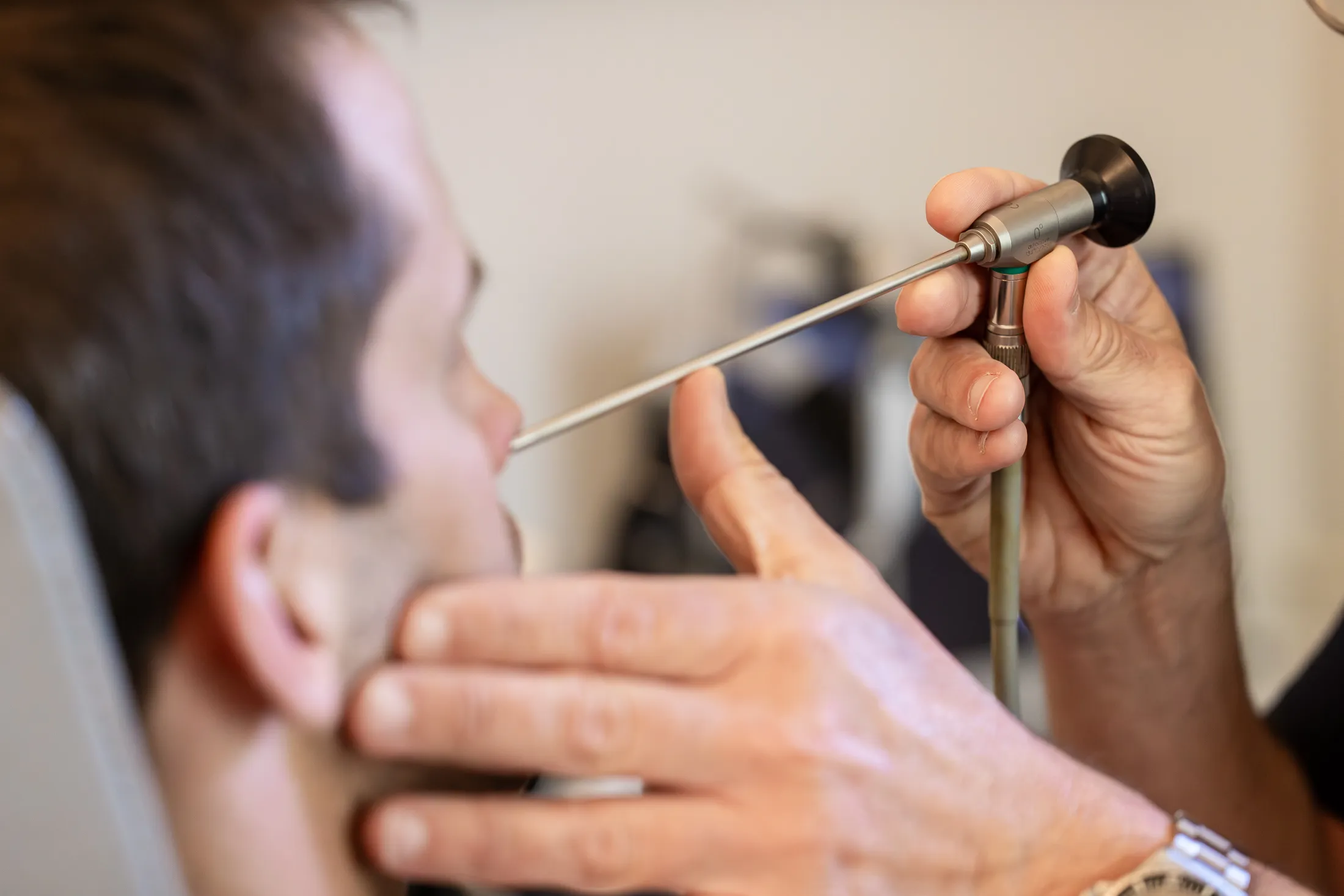
The diagnosis is confirmed by nasal endoscopy and, for chronic forms, by a computed tomography (CT) scan of the sinuses. Treatment begins with conservative measures (nasal rinses, cortisone spray, antibiotics if necessary). If the response is insufficient, endoscopic sinus surgery (FESS) can improve the ventilation and drainage of the sinuses and remove polyps.
Blocked, dry or running nose
Obstructed nasal breathing is one of the most common symptoms in ENT practice. The causes are varied and often multifactorial:
Anatomical causes: deviated nasal septum (septal deviation), enlarged nasal turbinates (turbinate hyperplasia), nasal valve stenosis, nasal polyps.
Inflammatory causes: allergic rhinitis (hay fever), vasomotor rhinitis, chronic sinusitis, medication-induced rhinitis (from excessive use of decongestant nasal drops).
A dry nose (rhinitis sicca) can be caused by dry indoor air, medication or hormonal changes and is often associated with crusting and nosebleeds.
The assessment includes a nasal endoscopy, allergy tests if necessary and imaging procedures. Treatment ranges from nasal rinses and sprays through allergy treatment to surgical corrections (septoplasty, turbinate reduction, nasal valve stabilisation).
Snoring and sleep apnoea
Snoring affects about 40% of the adult population and is caused by the vibration of slackened soft tissue in the throat during sleep. While simple snoring is primarily a social problem, obstructive sleep apnoea syndrome (OSAS) can have serious health consequences.
In OSAS, repeated breathing pauses occur due to a complete or partial collapse of the upper airway. Typical symptoms are loud, irregular snoring, observed breathing pauses, waking up at night with shortness of breath, daytime fatigue, difficulty concentrating and morning headaches.
Untreated OSAS increases the risk of high blood pressure, heart attack, stroke and accidents caused by microsleep. The diagnosis is confirmed by a sleep study (polygraphy/polysomnography).
Treatment is interdisciplinary and may include: weight reduction, positional therapy, CPAP ventilation (positive-pressure mask), a mandibular advancement splint as well as surgical measures on the nose and palate (e.g. laser or radiofrequency treatment of the soft palate, nasal septum correction).
Nosebleeds (epistaxis)
Nosebleeds are very common and harmless in most cases. The bleeding usually originates from the front of the nasal septum (Kiesselbach’s area), a richly perfused network of vessels.
Common triggers are dry mucous membranes, nose picking, forceful blowing of the nose, high blood pressure, blood-thinning medication (aspirin, anticoagulants) and colds. In children, nosebleeds are particularly common and almost always harmless.
Immediate measures: sit upright, tilt the head slightly forward (not back!), press the nostrils together for 10–15 minutes, apply a cold compress to the neck.
For frequent or heavy nosebleeds, a specialist assessment is advisable. Therapeutic options include chemical or electrical cauterisation of the source of bleeding, packing for heavier bleeding and the optimisation of risk factors.
Nose correction (rhinoplasty)
Rhinoplasty is a complex surgical procedure on the bony and cartilaginous nasal skeleton. It is performed to correct functional problems (obstructed nasal breathing), to make aesthetic changes or to combine both (functional septorhinoplasty).
The procedure is carried out under general anaesthesia in hospital and takes 1.5–3 hours depending on its extent. The operation can be performed openly (with a small incision on the columella) or closed (purely endonasal). The choice of technique depends on the individual anatomical conditions.
Aftercare includes wearing a nasal splint for about 1–2 weeks. Swelling and bruising largely subside within 2–3 weeks, but the final result can only be assessed after about 12 months. Sporting activities should be avoided for 6 weeks.
A detailed consultation with realistic expectations is a prerequisite for the procedure.
Nasal trauma
Nasal bone fractures are among the most common facial injuries and typically result from sports accidents, falls or traffic accidents. Symptoms are swelling, bruising, a change in the shape of the nose and obstructed nasal breathing.
The diagnosis is made clinically; an X-ray is rarely necessary. Treatment depends on the extent of the misalignment: for minor displacements, a wait-and-see approach may be taken. For significant misalignment, a closed reduction (straightening) is performed under local anaesthesia, ideally within the first 7–10 days after the trauma.
In more severe cases with an accompanying fracture of the nasal septum, immediate surgical treatment may be necessary. A later rhinoplasty is rarely required if a functional or aesthetic impairment remains after healing.
Smell disorders
The sense of smell is mediated by specialised olfactory cells in the olfactory mucosa at the front of the skull base. Smell disorders (hyposmia = reduced sense of smell, anosmia = complete loss of smell) can considerably impair quality of life and also reduce taste perception.
Common causes are viral infections of the upper respiratory tract (e.g. after COVID-19), chronic sinusitis with nasal polyps, allergic rhinitis, head injuries and age-related degeneration. Less commonly, neurological diseases or medication side effects are responsible.
The assessment includes a standardised smell test, nasal endoscopy and imaging procedures if necessary. Treatment depends on the cause and may include nasal sprays, systemic corticosteroids, smell training or, in suitable cases, surgical measures (polypectomy, sinus surgery).
Headaches
Pain in the mid-face area can indicate a nasal or sinus problem. Typical rhinogenic headaches occur as a dull, pressing pain in the forehead, cheek or eye region and intensify when bending forward.
The assessment includes a nasal endoscopy and, if necessary, a computed tomography (CT) scan of the sinuses to detect inflammation, anatomical narrowings (contact points) or other pathologies.
It is important to distinguish rhinogenic headaches from other common forms of headache (migraine, tension headaches), as the treatment differs fundamentally. If the cause is unclear, an interdisciplinary assessment with neurologists may be useful.